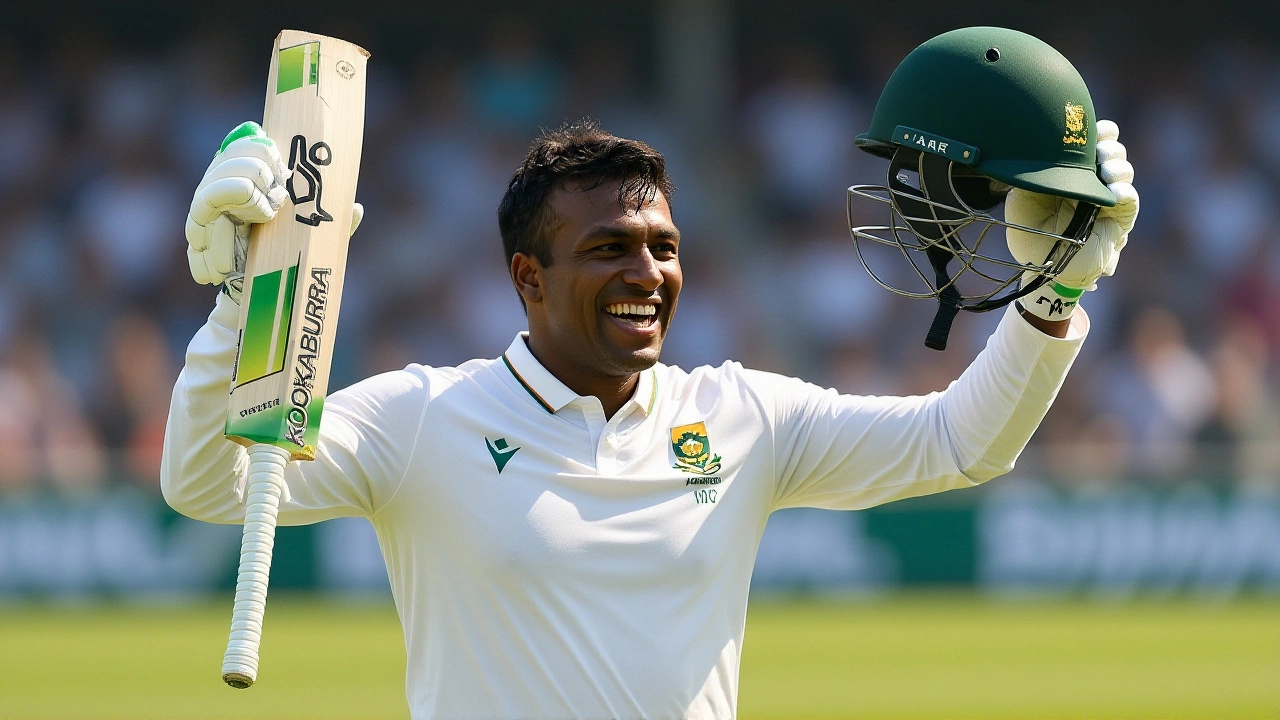
On Day 2 of the second Test in Guwahati, Senuran Muthusamy didn’t just score a century—he reclaimed a piece of his past. Batting at No. 7, the left-handed all-rounder reached 109 in 165 minutes, his first Test hundred, while Marco Jansen smashed a career-best 93, helping South Africa post a commanding 489 all out at the Barsapara Stadium. The total leaves India staring down a near-impossible chase on Day 3, trailing by 480 runs with just two wickets down at 9/0. This isn’t just another innings. It’s personal.
From spinner to savior: Muthusamy’s quiet revolution
Few expected Muthusamy to be the architect of South Africa’s dominance. Primarily selected for his left-arm spin, he’s taken just 14 wickets in 10 Tests. But his bat? It’s been a quiet weapon since his first-class debut. This was his 10th first-class century, and the most emotional. His father, a cricket fanatic who took him to every local match, died when Muthusamy was 11. "He never missed a game," Muthusamy told reporters after the session. "I still hear his voice when I step onto the field. This one’s for him." The innings wasn’t flashy, but it was flawless. On 48, he was given out lbw to Ravindra Jadeja—a decision overturned after review showed the faintest glove edge. From there, he played with the calm of a man who’d spent years proving doubters wrong. Former teammate Imraan Khan once said, "He had the ability to bowl, but his batting was always the main thing." On this day, it was the only thing that mattered.Jansen’s explosive counterpunch
While Muthusamy anchored, Jansen unleashed. The tall, muscular all-rounder, known more for his swing than his strokeplay, smacked 11 fours and six sixes in his 93. He took on India’s spinners like they were T20 bowlers, clearing the ropes at will. His partnership with Muthusamy—88 runs for the seventh wicket—broke India’s rhythm and turned the day’s momentum irrevocably. "I didn’t come here to defend," Jansen said post-session. "I came to make them think about what they’re playing for." It was the highest score by a South African No. 8 against India in India since 2006. And it came at a venue where the pitch has historically favored spinners and low scores.
India’s dilemma: Survive or surrender?
India, who lost the first Test by 30 runs in Kolkata, now face a historic challenge. No team has ever won a Test in Guwahati after being asked to follow on. And with the pitch expected to deteriorate further, a second innings chase of 480 is almost unthinkable. Captain Virat Kohli will need his top order—Rohit Sharma and Shubman Gill, who began Day 3 unbeaten at 9/0—to deliver a miracle. But the pressure isn’t just on the batters. India’s spin trio—Jadeja, Kuldeep Yadav, and Washington Sundar—were carved up for 6.2 runs per over. South Africa’s batting depth, once considered a weakness, now looks like its greatest strength. Seven batsmen reached double figures. The tail, led by Jansen and Muthusamy, added 138 runs for the last three wickets.A cultural bridge in the middle of the pitch
There’s a quiet symmetry here. Muthusamy, born to a South African family with deep Indian roots, practices yoga daily and visits temples regularly. His mother, who raised him alone after his father’s death, has watched his rise with quiet pride. "He’s always been disciplined," she told a local reporter before the match. "Not because he had to be—but because he loved the game too much to waste it." He’s not alone. Teammate Keshav Maharaj, also of Indian descent, has become one of South Africa’s most reliable spinners. Together, they’ve become symbols of a cricketing diaspora that’s reshaping international cricket. "They’re not just playing against India," said former Indian captain MS Dhoni in a recent interview. "They’re playing for a legacy that belongs to both countries."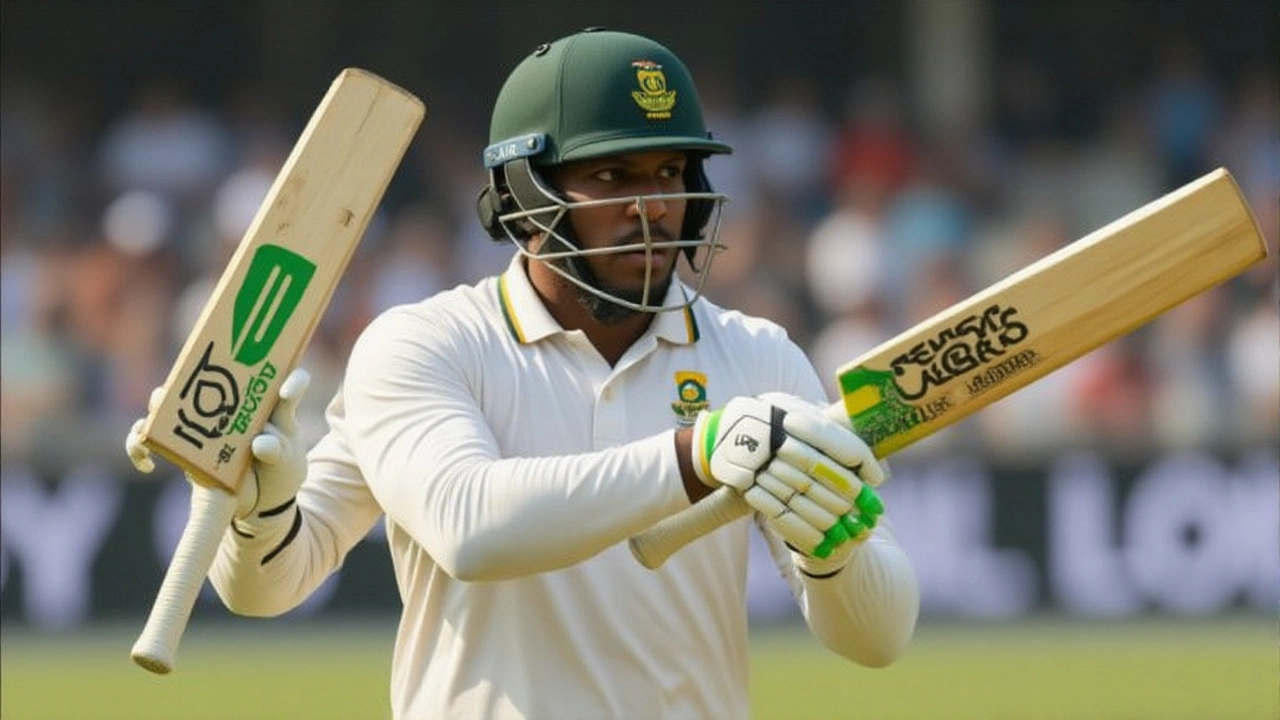
What’s next? The clock is ticking
With only two days left, India’s survival hinges on three things: avoiding collapse, managing the pitch’s wear, and getting Kohli and Gill to 150 each. South Africa, meanwhile, will look to bowl early and exploit any cracks. Captain Temba Bavuma has already hinted at a declaration strategy on Day 4 to force a result. This match has already shifted the series. South Africa leads 1-0. A win here would seal it—and make them the first team since 2010 to win two Tests in India in a single series. For Muthusamy, it’s more than statistics. It’s closure. It’s legacy. And it’s a reminder that sometimes, the most powerful innings aren’t the ones with the most boundaries—but the ones that heal.Frequently Asked Questions
Why is Senuran Muthusamy’s century considered so significant beyond the numbers?
Muthusamy’s 109 wasn’t just his first Test century—it came after losing his cricket-obsessed father at age 11. Raised by his mother with strict discipline, he’s long been overshadowed as a spinner. This innings, achieved with emotional calm and technical precision, represents a personal triumph and a tribute to his family’s sacrifices. It’s the kind of moment that transcends sport.
How does this result affect South Africa’s chances in the series?
With a 1-0 lead and a 489-run advantage, South Africa is now in complete control. Winning this Test would give them their first series victory in India since 2010 and only the third ever. India hasn’t lost two Tests in a home series since 2012. The psychological edge has shifted dramatically, and South Africa’s batting depth now looks like a blueprint for touring teams.
What makes Guwahati’s pitch so challenging for visiting teams?
The Barsapara Stadium pitch is notoriously slow and low, favoring spinners and discouraging aggressive strokeplay. Only three teams have posted 400+ here since 2010. The surface cracks as the match progresses, making batting in the fourth innings extremely difficult. South Africa’s 489 is the highest total ever recorded here in a Test, making India’s task even more daunting.
How has Marco Jansen’s performance changed perceptions of him as a player?
Jansen was long seen as a pace-bowling all-rounder with limited batting impact. His 93, featuring six sixes and 11 fours, proves he can dominate even the toughest spin-friendly conditions. This innings elevates him from a supporting actor to a match-winner, and could force South Africa to reconsider his role in future Tests, especially in Asia.
Why is South Africa’s success in India considered such a big deal?
India has won 75% of home Tests since 2000. Only Australia (2004), England (2012), and South Africa (2010) have won a Test series here in the last 25 years. South Africa’s ability to post 489 in Guwahati—where even 300 was once considered massive—shows they’ve cracked the code. Their blend of grit, depth, and adaptability now makes them the most dangerous touring side in modern Test cricket.
What role does cultural identity play in Muthusamy and Maharaj’s success?
Both players carry Indian heritage, yet represent South Africa with pride. Their presence challenges outdated narratives about cricketing loyalty and identity. Muthusamy’s temple visits and yoga routine, combined with Maharaj’s cultural fluency, give them unique insight into Indian conditions—and mental resilience. They’re not just playing against India; they’re playing with a deeper understanding of its cricketing soul.