
On Wednesday, November 19, 2025, Lululemon Athletica Inc. stock opened with a 4.91% jump, far outpacing the S&P 500’s modest 0.91% rise — a signal that investors are seeing something deeper than a random rally. The move came just hours after key analysts revised their price targets, and amid a flurry of data showing the athletic apparel giant’s financial engine is humming, even as its stock price has spent much of the past year in freefall. By 4:58 PM Indian Standard Time, shares were trading at $183.73, and by the close on November 26, they settled at $181.94 — up $4.43, or 2.5%, on volume of 3.84 million shares. The pre-market quote on November 28 showed further momentum: $183.60, up 0.91% before the bell even rang.
Why This Surge Isn’t Just Noise
This wasn’t a speculative spike. It was a fundamental re-rating. Lululemon’s ROE of 36.10% is more than double the industry average. Its net sales grew 23.03% year-over-year, and operating profits climbed 27.46%. Even more telling: its debt-to-equity ratio remains near historic lows, meaning the company isn’t gambling on borrowed money to grow — it’s building from cash flow. And that cash flow? It’s $1.16 billion today, with projections pointing to $1.6 billion by 2030. That’s not just healthy. It’s elite.Analysts noticed. On November 18, Brooke Roach of Goldman Sachs set a $180 target. The next day, Jay Sole at UBS bumped his to $183. Even more striking: Janine Stichter of BTIG dropped a $303 target — a 65% upside from current levels — citing global expansion and brand loyalty as underappreciated drivers. Meanwhile, Morgan Stanley’s Alexandra Steiger and Needham’s Tom Nikic both see $185 and $192 respectively as fair value. The disconnect between price and potential is widening.
Investor Sentiment: From Pessimism to Possibility
Let’s be clear: this stock has been battered. Over the past year, Lululemon returned -45.67%. Two years? Down 57%. Ten-year investors, though, are still up 280%. That’s the story in a nutshell — a recent storm, but a long-term sunbeam. What’s changed? Market expectations. After months of declining U.S. same-store sales, many investors had priced in disaster. But profits rose 13.4% anyway. The balance sheet remains pristine. And buybacks? Aggressive. The company’s repurchased nearly $1 billion in shares over the last 18 months. That’s not just capital allocation — it’s a vote of confidence from management.Institutional ownership remains at 100%. That’s not a typo. Every single share is held by institutions — mutual funds, pension plans, hedge funds. No retail speculation. This is money that does its homework. And they’re betting the U.S. slowdown is already reflected in the price. The real growth story? Asia. China, in particular, is becoming a powerhouse. Lululemon’s stores there are outperforming U.S. locations in both foot traffic and average transaction value. That’s not a footnote — it’s the next chapter.

The Valuation Puzzle: Undervalued or Just Troubled?
Here’s where it gets interesting. Lululemon trades at a P/E of 12.1x — below the S&P 500 average, and far below its own five-year median of 35x. Its price-to-book ratio is 4.74, which sounds high, but when you consider its brand equity, customer retention, and pricing power, it’s not outlandish. Simply Wall St. gave it a 5 out of 6 on their valuation scale. Some analysts believe the fair value is closer to $225. Others, wary of slowing U.S. demand, see $100 as more realistic. The gap? That’s where the opportunity lies.And the market is sensing it. In the week leading up to November 19, shares surged 9.6%. The 5-day performance since November 20? +11.56%. Even the 1-month return, though only +2.08%, beats the S&P 500’s -0.38% drop over the same period. In an era where retail stocks are getting crushed by inflation and shifting consumer habits, Lululemon is an outlier — not because it’s immune, but because it’s adapting faster than anyone expected.
What’s Next?
The next catalyst? Q4 earnings in early February 2026. If international sales continue to outpace North America — and if margins hold — we could see another leg up. The company’s global expansion, including new flagship stores in Tokyo and Shanghai, and its growing digital ecosystem, are quietly building a moat. Meanwhile, buybacks will likely continue, supported by that $1.6 billion projected free cash flow. The real question isn’t whether Lululemon can grow — it’s whether the market will finally stop pricing it like a company in decline.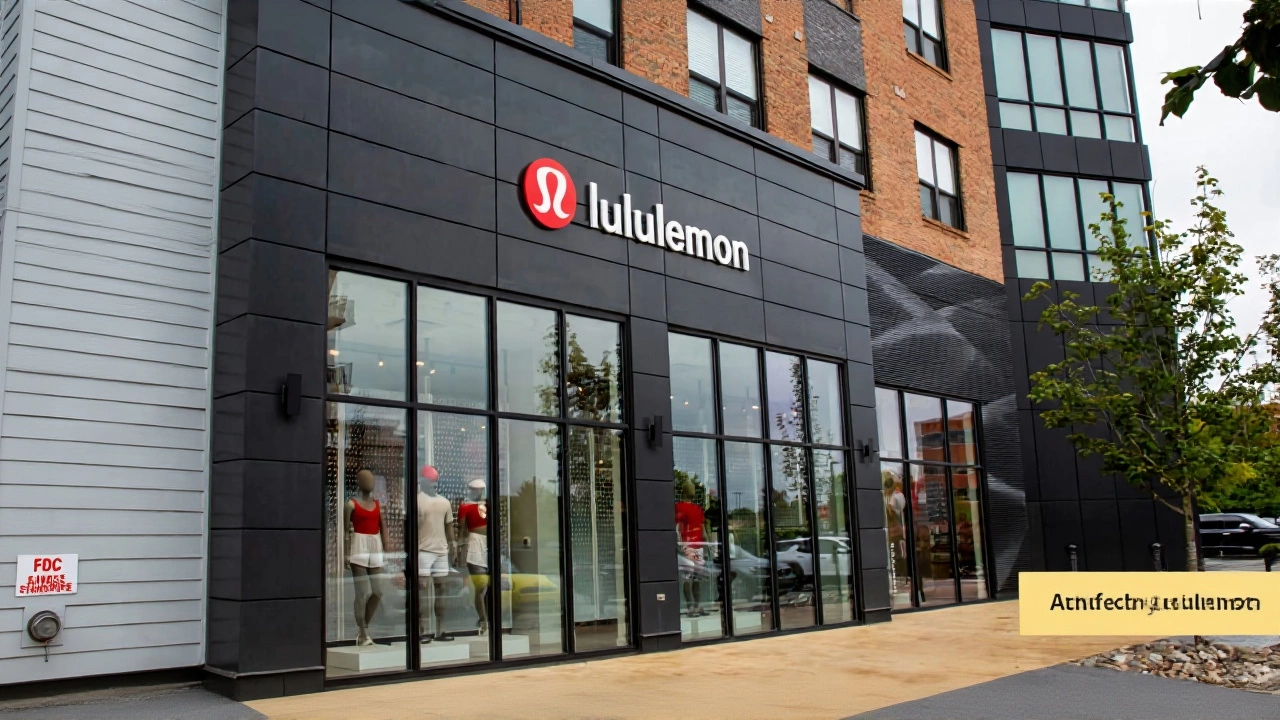
Historical Context: A Rollercoaster with Purpose
Lululemon’s journey over the last decade is a masterclass in resilience. From $20 a share in 2015 to over $300 in 2021, the stock soared on yoga pants and community branding. Then came the pandemic boom, followed by post-pandemic correction. The 2023-2025 slump wasn’t just about sales — it was about perception. Investors worried the brand had peaked. But the numbers tell a different story. Revenue growth. Profit growth. Cash flow growth. All while the stock languished. That’s the classic setup for a rebound. The question now is whether this November surge is the start of a trend — or just a temporary sigh of relief.Frequently Asked Questions
Why is Lululemon’s stock rising despite a -45% return over the past year?
The stock’s recent gains reflect a disconnect between market sentiment and underlying fundamentals. While the share price has fallen sharply since 2023, profits rose 13.4% last year, free cash flow hit $1.16 billion, and international sales are accelerating — especially in China. Analysts believe the market had already priced in a worst-case scenario, making even modest improvements feel like a rebound.
How do analyst price targets vary so widely for Lululemon?
Analysts are split between growth and risk perspectives. Bullish targets like Janine Stichter’s $303 reflect confidence in global expansion and brand loyalty, while conservative estimates like Randal Konik’s $120 assume prolonged U.S. slowdown. The $180–$195 range from Goldman Sachs, UBS, and Morgan Stanley suggests a consensus that Lululemon is undervalued — but not a runaway winner — with its current price around $183.
What role do buybacks play in Lululemon’s stock performance?
Lululemon has repurchased nearly $1 billion in shares over the past 18 months, reducing share count and boosting earnings per share. With $1.16 billion in free cash flow and no significant debt, the company can sustain buybacks even if sales dip. This signals management’s confidence in long-term value and directly supports the stock price by tightening supply.
Is Lululemon truly undervalued, or is it just a value trap?
The 12.1x P/E ratio and 4.74 P/B are low for a company with 23% sales growth and 36% ROE — suggesting undervaluation. But the risk lies in U.S. consumer fatigue. If international growth doesn’t offset domestic weakness, the stock could stall. Still, institutional ownership at 100% and rising cash flow make a total collapse unlikely. It’s a high-risk, high-reward bet — not a trap.
How important is China to Lululemon’s future?
China is now Lululemon’s second-largest market and growing faster than the U.S. Stores there report higher average transaction values and stronger customer retention. With only 100+ stores in China versus over 500 in the U.S., there’s massive room to expand. Analysts see China as the key to unlocking $200+ valuations — if the brand can replicate its North American community-driven model in a culturally distinct market.
What should retail investors watch for in the next quarter?
Watch Q4 earnings in February 2026 for three things: international sales growth rate, gross margin trends, and buyback activity. If international revenue exceeds 30% of total sales and margins hold above 55%, the stock could surge past $200. Any sign of U.S. sales decline accelerating, however, may trigger a pullback. The market is pricing in stagnation — beating that expectation is the key.